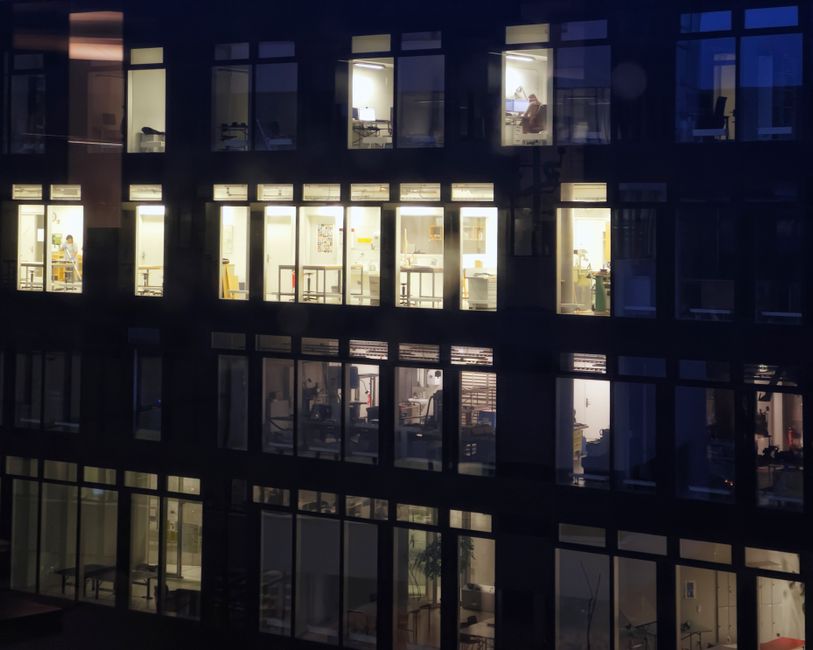
Prague's commercial property market recorded its highest office vacancy rate in six years during the second quarter of 2026, with roughly 13.4 percent of grade-A space sitting empty across the city, according to data compiled by the Czech Real Estate Monitor. That figure would have been unthinkable three years ago, when demand from tech relocations and nearshoring operations was pushing rents in Pankrác and Smíchov to record highs. The mood has shifted sharply.
The timing matters because Prague had spent the better part of 2023 and 2024 positioning itself as a Central European hub for companies diversifying away from Western Europe's higher wage costs. That pitch is now harder to make. Energy bills remain elevated — small businesses on Náměstí Míru and in the Žižkov district report monthly utility costs running 30 to 40 percent above pre-2022 levels — while the Czech National Bank's benchmark rate, held at 3.75 percent since March, is keeping credit expensive for SMEs trying to expand or refinance.
Karlín and the New Reality for Commercial Tenants
Nowhere is the pressure more visible than in Karlín, once the poster child for Prague's post-industrial revival. Developers completed three significant office schemes there in the first half of 2026, adding around 47,000 square metres of new space to a district where demand has softened. The result is a landlord market that has quietly become a tenant market, with incentive packages — rent-free periods of up to nine months, fit-out contributions — now common in lease negotiations that would have been bluntly refused eighteen months ago.
The Prague City Development Authority, which tracks enterprise zone activity under its 2025-2030 Metropolitan Plan, acknowledged in a June briefing that inbound foreign direct investment inquiries fell approximately 18 percent year-on-year in the first five months of 2026. Analysts at Patria Finance, the Prague-based brokerage, attribute part of that decline to the broader European uncertainty — the Russian threat weighing on Polish and Baltic supply chains has made some multinationals cautious about Central European commitments generally, even where the Czech Republic itself is not directly exposed.
The labour picture is equally complicated. Unemployment in Prague stood at 2.1 percent in May, one of the lowest rates in the EU, but that headline masks a mismatch problem. The Czech-German Chamber of Commerce, headquartered on Václavské náměstí, flagged in its spring survey that 61 percent of its Prague-area member companies reported difficulty filling mid-level technical and logistics roles, even as white-collar hiring has slowed in finance and legal services. Wages in manufacturing and warehousing are rising at around 7 percent annually to attract workers — squeezing margins for firms already absorbing higher energy and borrowing costs.
What Businesses and Investors Should Watch
The residential property side offers little comfort for employees trying to stay close to work. Average asking prices for apartments in Prague 2 and Prague 3 postal districts have eased slightly from their 2024 peak — down about 4 percent in nominal terms — but mortgage affordability remains stretched. A typical 70-square-metre flat in Vinohrady is still listed at between CZK 9.5 million and CZK 11 million, and monthly repayments at current rates absorb a larger share of household income than at any point since the late 1990s.
Three things will determine the trajectory for Prague businesses in the second half of the year. First, the Czech National Bank's September rate decision: any cut would ease borrowing costs and might unlock pent-up investment. Second, the uptake of EU cohesion funding under the Operational Programme Just Transition, which has CZK 42 billion allocated for Czech projects through 2027 and could redirect some capital toward Prague-region suppliers. Third, whether the broader European security climate stabilises enough to revive corporate confidence — the geopolitical turbulence that has rattled bond markets and delayed infrastructure decisions across the continent has not spared Czechia's planning departments either.
For businesses navigating this period, the practical advice from Czech industry associations is consistent: lock in energy contracts before autumn, prioritise staff retention over new hires where possible, and treat the current softness in Karlín and Holešovice office rents as a window to upgrade space at lower cost before the market tightens again. Prague's fundamentals remain solid. The pressures of 2026 are real, but they are the pressures of a mature economy adjusting, not one in distress.