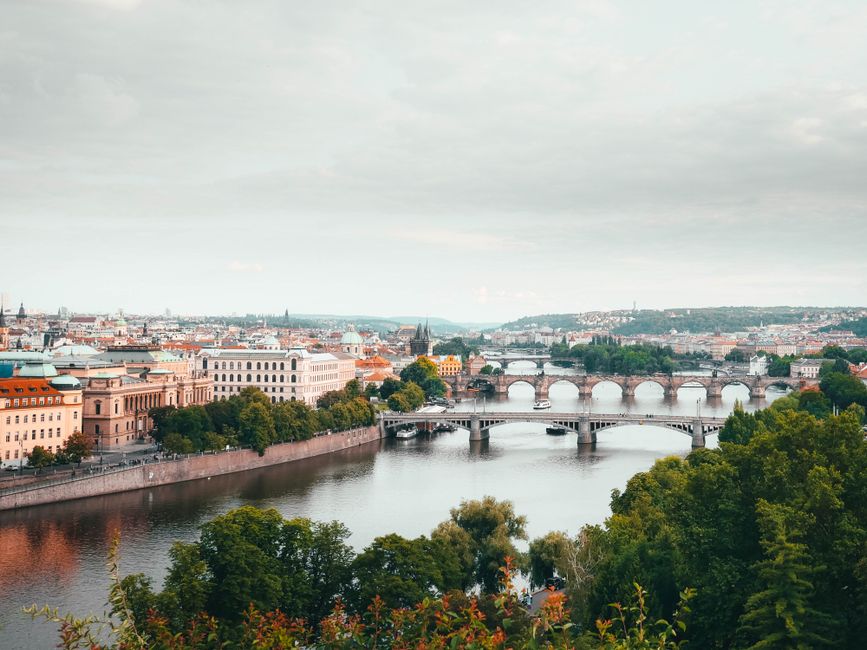
Prague's municipal authorities are sitting on an estimated 340,000 duplicate image files spread across at least four separate city-managed digital repositories, according to an internal review completed by the Prague City Hall's Department of Digital Services in May 2026. The redundancy is not a minor housekeeping irritant — it is consuming roughly 18 terabytes of server capacity that the city pays to maintain, and it is actively complicating planning decisions in districts from Žižkov to Holešovice.
The timing matters. Prague's city council approved its Digital Prague 2030 strategy in March, committing to consolidate public-sector data infrastructure before the end of next year. That plan depends on clean, deduplicated image archives — particularly photographs tied to building permits, heritage protection assessments, and public space documentation. The duplicate problem sits directly in the path of that goal.
Where the Duplicates Come From
The issue has a straightforward origin. Over roughly a decade, different Prague city departments — including the Institute of Planning and Development on Vyšehradská Street and the Prague 1 Municipal Office on Vodičkova — uploaded photographs independently, with no shared naming convention or metadata standard. The same heritage survey photograph of a Malá Strana courtyard might exist under six different file names across three separate systems. A construction-site progress photo from Smíchov's Anděl quarter could be stored in both the planning department's SharePoint environment and the separate Geoportal Praha mapping platform.
The Institute of Planning and Development, which manages the city's spatial data and publishes it through the Geoportal Praha portal, identified image duplication as one of three primary obstacles to data interoperability in a working paper published in April 2026. The paper did not assign a cost figure to the problem but noted that manual review of flagged duplicates was occupying staff time across multiple departments.
Digital archivists distinguish between exact duplicates — identical binary files saved twice — and near-duplicates, which are photographs of the same subject taken seconds apart or processed at different resolutions. Prague's review found that exact duplicates account for approximately 60 percent of the redundant files, making them the more tractable portion of the problem. The remaining 40 percent, the near-duplicates, require either automated perceptual-hashing tools or human judgment to resolve, and that is where the workflow bottleneck sharpens.
The Cost in Storage and Staff Hours
Eighteen terabytes sounds abstract until translated into budget terms. Enterprise cold-storage pricing for municipal contracts in Central Europe typically runs between 2,500 and 4,000 Czech crowns per terabyte per year, depending on redundancy and access requirements. At the lower end of that range, the duplicate image load alone represents a recurring annual cost of around 45,000 crowns — not a catastrophic sum, but one that scales as the archive grows. Prague's Geoportal adds new photographic data continuously, including aerial survey imagery refreshed on an annual cycle.
The more significant expense is human. The May 2026 review estimated that staff across affected departments spend a combined total of roughly 600 working hours per year manually locating, cross-checking, and in some cases re-uploading images that should already be accessible from a single authoritative source. At average civil service wage rates for specialist digital roles in Prague, that translates to somewhere between 180,000 and 220,000 crowns annually in unproductive labour — before accounting for the downstream delays in planning assessments that rely on accurate photographic records.
The practical path forward, as outlined in the Digital Prague 2030 working documents, involves deploying automated deduplication software across all municipal image repositories by the first quarter of 2027, followed by the introduction of a unified Digital Asset Management system with mandatory metadata tagging. The Institute of Planning and Development is expected to run a pilot programme on its internal archive before the end of 2026, with results informing the broader city-wide rollout. For residents and businesses waiting on planning decisions — particularly in rapidly developing corridors like Holešovice's former market district — a cleaner, faster document system could mean permit processes that take days fewer to complete. The numbers, at least, now exist to make that argument in city budget meetings.