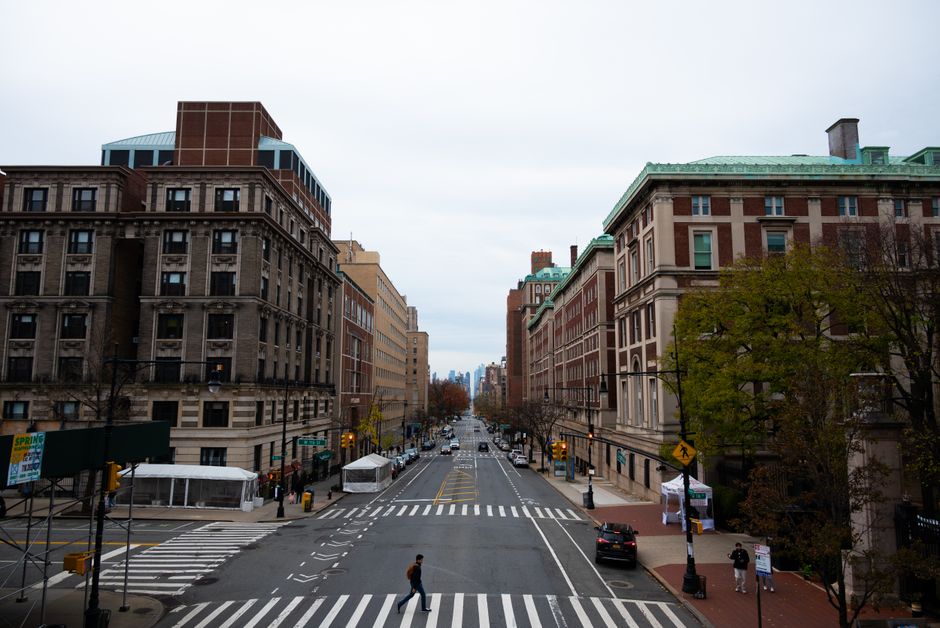
Prague's Institute of Planning and Development confirmed this spring that its geospatial data platform holds an estimated 14,000 duplicate or near-identical street-level images — photographs taken during overlapping surveying runs between 2019 and 2024 that have since cluttered the city's official urban data infrastructure. The problem is not cosmetic. Planners using the platform to assess building façades in Žižkov or traffic flow along Vinohradská street have reported being served stacked images of the same location from different survey dates, slowing project timelines and, in at least two documented cases, causing conflicting assessments of heritage-listed properties.
The issue landed on the agenda of Prague's Digital City programme — the municipality's flagship smart-city initiative operating under the umbrella of the Prague Smart City concept — partly because of external pressure. The European Commission's Urban Data Space initiative, which Prague formally joined in January 2025, requires member municipalities to meet minimum data-quality thresholds by the end of 2026. Duplicate imagery directly undermines those standards, triggering a compliance clock that city hall cannot ignore.
How Prague Compares to Vienna and Amsterdam
Prague is not alone in confronting this problem, but it is moving more slowly than some of its Central European and Western European peers. Vienna's MA 41 — the city's surveying authority — completed a systematic deduplication of its urban image database in March 2025, cutting redundant records by 31 percent across its 23 districts, according to the authority's published annual report. Amsterdam's urban data team, working through the Gemeente Amsterdam's Digital Infrastructure department, ran an automated hash-matching process across its street-level archive in late 2024 and reported clearing more than 9,000 duplicate frames from its ArcGIS layers within six weeks.
Prague's effort, by contrast, is being handled in phases. The Institute of Planning and Development launched a deduplication audit in February 2026, contracting local geospatial firm S-GECO to review imagery tied to six priority districts — Praha 1, Praha 2, Praha 3, Praha 7, Praha 10, and the brownfield zone around Holešovice Nádraží. The contract, listed in the city's public procurement register, is valued at 2.3 million Czech crowns. Work on the remaining districts is scheduled to begin in the first quarter of 2027, meaning full completion will lag Vienna by nearly two years.
The practical consequences are visible. Architects applying for permits at the Prague 3 municipal office have noted that the city's reference imagery for streets like Seifertova and Korunní sometimes returns pre-2020 images tagged identically to 2023 survey data, creating ambiguity about which streetscape is current. The Prague Heritage Preservation Institute, which cross-references city imagery when reviewing modifications to listed buildings in the Vinohrady and Josefov neighbourhoods, flagged the problem in a December 2025 internal memo — a document later referenced in city council minutes from January 2026.
What Residents and Developers Should Expect Next
S-GECO's deduplication work on the six priority districts is due to deliver cleaned datasets to the Institute of Planning and Development by October 2026. Once validated, those layers will be integrated into the public-facing Geoportal Praha platform, which serves architects, urban researchers, and residents checking development plans near their homes. The Geoportal already logs roughly 40,000 unique visitors per month, according to figures the Institute published in its 2025 activity report.
For developers and residents navigating permit applications in the meantime, the Institute recommends cross-referencing Geoportal Praha imagery against Google Street View or the commercial HERE Maps dataset to spot obvious discrepancies before submitting documentation. The Prague 1 municipal office has quietly issued the same guidance to planning consultants operating in the historic centre since March.
The longer-term fix — automated, real-time deduplication baked into the surveying pipeline itself — is outlined in Prague's Digital City Action Plan 2025–2030, but no procurement for that system has been announced. Vienna funded its equivalent infrastructure upgrade through a dedicated EU Cohesion Fund allocation. Whether Prague pursues a similar route through the current EU programming period, which runs to 2027, will likely determine how quickly it closes the gap with its more digitally agile neighbours.