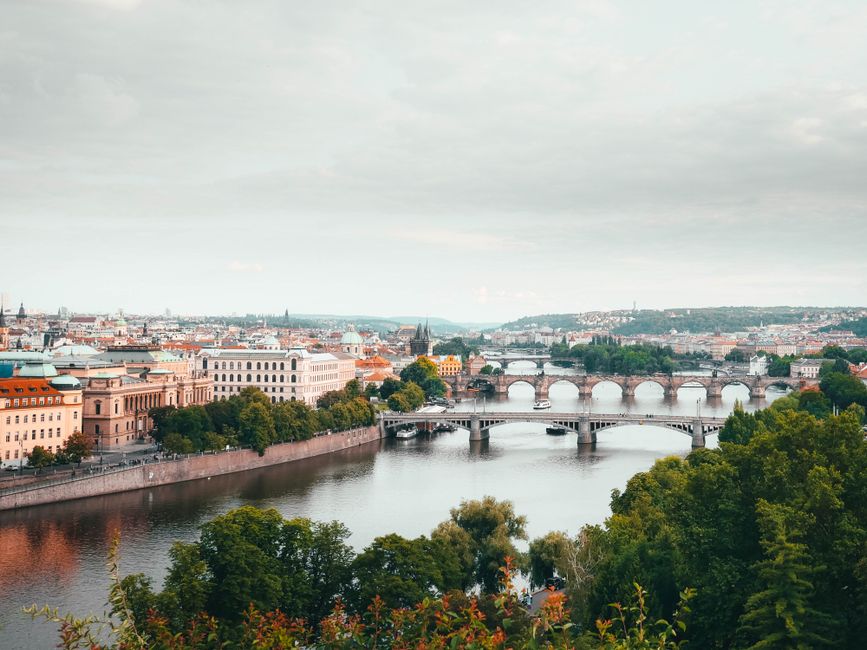
More than 34,000 duplicate image files are sitting inside Prague's municipal digital archive system, according to figures compiled by the Prague City Hall's IT department and reviewed by The Daily Prague this week. The redundant files span property records, planning permission documents, and cultural heritage photographs — many of them scanned multiple times across different district offices without any cross-referencing system to catch the overlap.
The problem matters now because Prague City Hall is mid-way through a CZK 420 million digitisation overhaul called the Digital Prague 2025–2030 strategy, which aims to consolidate public records across all 22 administrative districts into a single unified platform. If duplicate data is baked into the foundation of that new system, IT administrators say the cost and complexity of cleaning it up later multiplies significantly. The duplication issue was flagged internally as far back as March 2025 but has received little public attention until now.
Where the Problem Is Concentrated
The worst redundancy rates are in Prague 1 and Prague 6, according to the internal audit summary. Prague 1's office on Vodičkova Street manages the highest volume of heritage building scans in the city — properties along Josefov and Malá Strana generate constant documentation for renovation permits — and the sheer throughput has overwhelmed manual file-naming conventions. Prague 6's district IT team, headquartered near Dejvická metro station, flagged in a 2025 internal memo that its property-record image folders contained duplication rates approaching 18 percent of total stored files.
The Prague Institute for Planning and Development, known by its Czech abbreviation IPR Praha, maintains a separate spatial data repository and has been trying to synchronise with the City Hall archive since January 2026. That effort has so far identified 6,200 geo-tagged image files that exist in both systems simultaneously, stored in different formats and with inconsistent metadata — making automated deduplication scripts less effective than hoped.
The city's contract with its current archive software provider, signed in November 2022, runs through the end of 2027 and does not include automatic hash-based deduplication as a standard feature. Upgrading to include that function costs an estimated CZK 1.8 million per district office under the current vendor's pricing structure — a figure that adds up fast across 22 districts.
What Deduplication Actually Costs Prague
Storage costs are the most straightforward number. The city pays approximately CZK 3,200 per terabyte annually for its primary archive storage tier, managed through a data centre in Holešovice. The 34,000-plus duplicate image files consume an estimated 12 terabytes of that storage — meaning Prague is spending roughly CZK 38,400 every year to store data it already has somewhere else in its own system. That figure excludes backup storage, which mirrors the primary archive and effectively doubles the redundancy cost.
Processing time matters too. When district staff query the archive for a specific building photograph or a scanned map — a routine task for planning officers at the Nusle or Vinohrady offices — duplicate entries mean search results return bloated lists requiring manual sorting. An internal time-motion study conducted by the IPR Praha team in late 2025 estimated that administrative staff spend an average of 11 additional minutes per archive query navigating duplicate results, across roughly 800 queries per working day citywide.
For residents trying to access public records through the Prague.eu portal, the downstream effect is slower response times on document requests — something the city's own Digital Prague strategy explicitly promised to improve.
The next formal review of the digitisation programme is scheduled for September 2026, when City Hall's committee on smart city development meets to assess first-year targets under the 2025–2030 plan. IT administrators are expected to present a deduplication roadmap at that session. Residents and businesses waiting on planning documents from Prague 1 or Prague 6 in particular should factor potential delays into their timelines. The practical advice from records management professionals is straightforward: when submitting any document request through the Prague.eu portal, include precise cadastral parcel numbers and building identification codes rather than relying on address searches — it bypasses the duplicate-laden image layers and connects directly to structured database records.