Prague's municipal administration confirmed this week that a structured audit of duplicate images across city-managed digital archives has identified more than 14,000 redundant files spread across the platforms of at least six district offices, including Praha 2 and Praha 7. The cleanup, launched formally on July 1, is the first coordinated effort of its kind since the city unified its content management infrastructure under the Prague Digital Innovation Programme in 2023.
The timing is deliberate. Prague's public-facing web portals — including the main portal.gov.cz landing pages for district services — are scheduled for a significant accessibility overhaul before the end of Q3 2026, with compliance deadlines tied to updated EU Web Accessibility Directive requirements. Duplicate or mismatched images have repeatedly caused rendering errors and slowed page-load times, a problem that became harder to ignore once user traffic data from the first quarter of this year was compiled by the city's IT department, Prague City Hall's digitisation unit on Mariánské náměstí.
What the Audit Found in Praha 2 and Beyond
The audit, conducted by the city's ICT department in cooperation with the Prague Institute for Planning and Development — the agency based in Holešovice that oversees urban data strategy — found that in Praha 2 alone, the same stock photograph of Náměstí Míru appeared in 47 separate entries across the district's official event calendar and news archive. Similar patterns turned up in Praha 7's Letná and Holešovice neighbourhood pages, where renovation project photos had been uploaded multiple times under different file names, creating dead-end links and broken image tags visible to ordinary residents trying to track redevelopment progress along Milady Horákové street.
The duplication problem is not unique to Prague's web teams. Berlin's Senate Chancellery reported a comparable issue in 2024 when migrating legacy CMS content, and Warsaw's digital office spent roughly four months in 2025 resolving similar archive conflicts following a system migration. What sets Prague's situation apart is the explicit link to accessibility law: under the revised EU directive, non-compliant public-sector websites face formal notifications from national oversight bodies after October 1, 2026.
City hall has not published a formal cost estimate for the cleanup work, but the Prague Digital Innovation Programme's 2026 budget allocation for digital infrastructure maintenance stands at approximately 38 million Czech crowns, according to documents published on the city's official transparency register in January. Programme managers have said the image deduplication work will be absorbed within that envelope rather than requiring a supplementary request.
How the Replacement Process Works — and What Comes Next
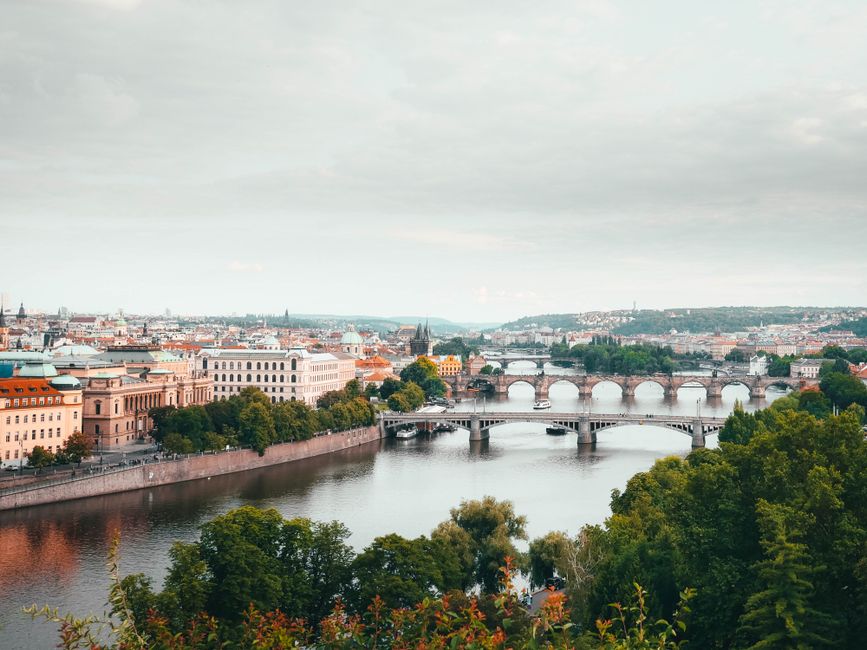
The practical mechanics involve two parallel tracks. District web administrators have been given until July 25 to flag and remove confirmed duplicates using a centralised tool rolled out by the Prague Digital Agency, the city-owned entity on Jungmannova street responsible for municipal technology services. Simultaneously, a contracted team is building a shared image library — a single repository of approved photographs covering major Prague landmarks, public spaces, and infrastructure sites — that all district offices will draw from going forward.
Residents who use the city's neighbourhood consultation platforms, particularly those engaged with urban planning feedback processes in Žižkov and Vinohrady, will notice the cleaned-up pages once the first batch of replacements goes live. The Prague Digital Agency has indicated the initial tranche of updated district sites should be visible by July 18, with the remainder to follow before August 15.
For anyone who submits photographs or documents through Prague's citizen services portal — whether reporting a broken streetlight on Korunní street or filing a neighbourhood petition — the practical advice from city IT staff is straightforward: avoid uploading the same image file more than once, and use descriptive filenames rather than camera defaults, which have been identified as a leading cause of the duplication problem in the first place. The shared library, once fully live, will let residents select from pre-approved images rather than uploading their own for standard submission forms, cutting the risk of future accumulation.