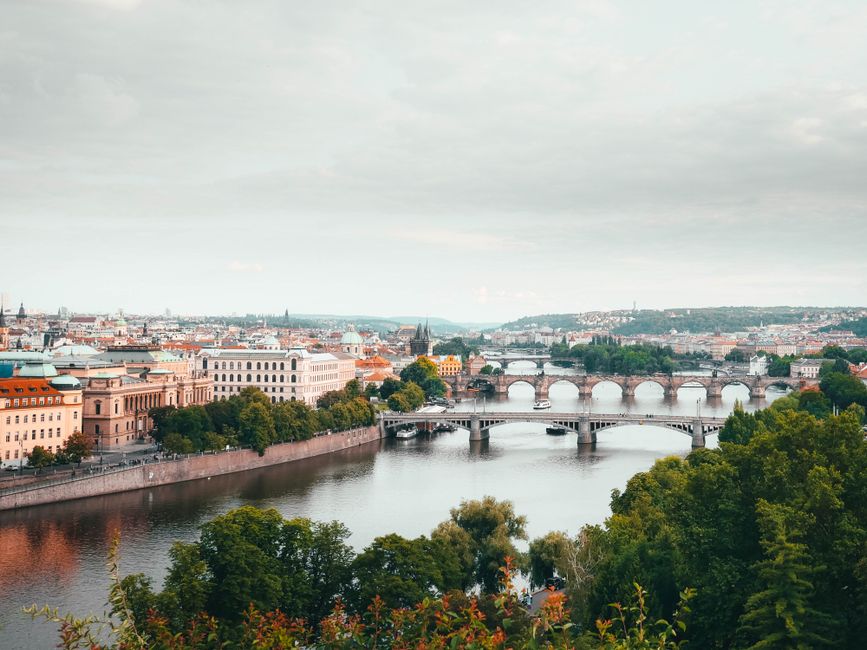
A growing number of Prague residents are raising alarms about a pattern they say is reshaping the visual identity of their streets: original architectural details, decorative tiles, historic signage and facade murals on older buildings being replaced — often during renovation — with cheap reproductions that do not match the originals in material, colour or craftsmanship. The issue, which community groups have taken to calling "duplicate image replacement," has come to a head in several inner-city districts this summer.
The concern is not abstract. Across Prague 2 and Prague 3, residents and local heritage advocates say they have watched as landlords and developers, citing cost pressures and the difficulty of sourcing original materials, swap out authentic facade elements for mass-produced copies. The results, critics argue, look convincing from a distance but fail basic scrutiny up close — and permanently alter the built record of neighbourhoods that survived both the Second World War and communist-era demolition drives largely intact.
Street by Street, a Slow Erasure
On Mánesova Street in Vinohrady, a row of late-19th-century apartment buildings has been at the centre of complaints filed with Prague's State Monument Care Institute, known by its Czech abbreviation NPÚ. Residents of one building describe watching workers remove original plaster relief panels during a 2025 facade restoration and install what they describe as fibreglass copies painted to approximate the original ochre tones. Several neighbours say they only learned of the swap after scaffolding came down.
A similar situation has been documented by members of the Žižkov civic association Žižkov Sobě, which has been tracking renovation permits in Prague 3 since 2023. Members say at least six buildings near Seifertova Street have undergone facade work in the past 18 months where original decorative elements were not restored but replicated using materials that do not meet the standards typically required for listed structures. The association has submitted written objections to the Prague 3 municipal office, asking for a formal review of permit conditions.
The frustration runs deep among long-term residents. One woman who has lived on Blanická Street in Vinohrady for more than two decades described the experience of seeing her building's original ceramic entrance tiles replaced during a stairwell renovation as "like watching someone photocopy a painting and throw away the original." She and several neighbours are now in informal contact with the NPÚ's Prague territorial office on Sabinova Street, asking what legal recourse exists when work is done under a standard renovation permit rather than a heritage restoration permit.
What the Rules Say — and Where They Fall Short
Czech heritage law distinguishes clearly between listed monuments, where any facade alteration requires NPÚ approval, and unlisted historic buildings, where municipal building offices hold jurisdiction. Prague's inner districts contain thousands of buildings in the second category — architecturally significant but without formal protected status. For these structures, owners generally need only a standard building permit, and there is no legal obligation to use original or period-appropriate materials.
The NPÚ's own published figures indicate that Prague's historic core contains roughly 40,000 buildings constructed before 1945, of which fewer than 3,000 carry formal monument protection. That leaves a vast majority of the city's pre-war fabric subject only to general planning rules, which preservation advocates say are routinely interpreted in favour of cost-efficient renovation over authentic restoration.
Replica materials can cost as little as 15 percent of what authentic lime-plaster or hand-crafted ceramic restoration would run, according to estimates circulated by Prague-based architectural conservation firm Restor Praha, which has worked on projects in Smíchov and Dejvice. That price gap, residents and advocates argue, creates a structural incentive for building owners to choose the replica every time.
Residents and civic groups urging action say the most immediate step would be for Prague City Hall to expand the list of buildings in the inner districts eligible for the city's heritage grant scheme, Pražský památkový fond, which currently prioritises formally listed structures. A broader eligibility threshold, they argue, would give owners a financial reason to choose authentic materials without requiring a full monument designation process. The Prague 2 and Prague 3 municipal offices have both received formal petitions on the question this year; no public response has been issued from either office as of this week.