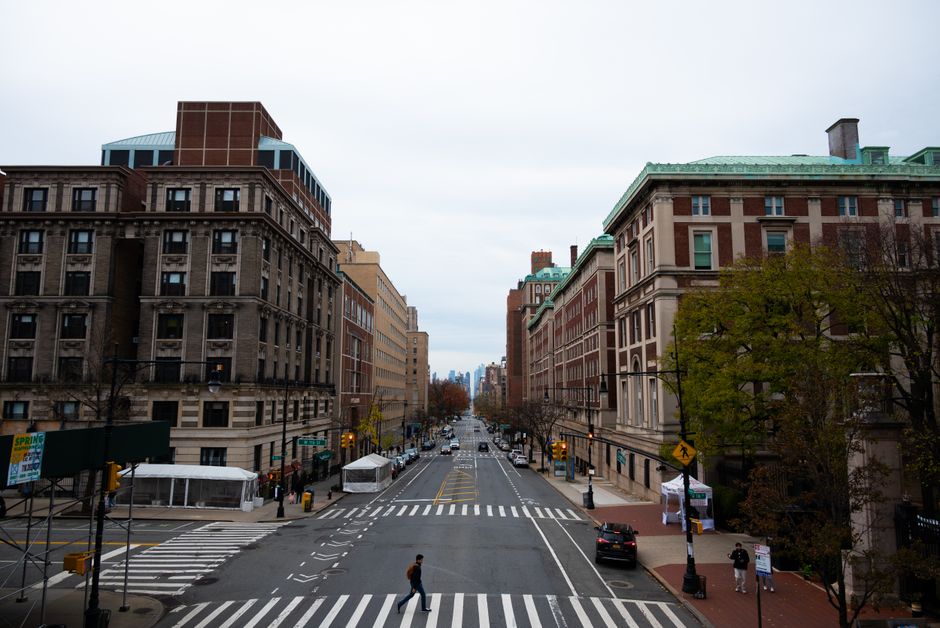
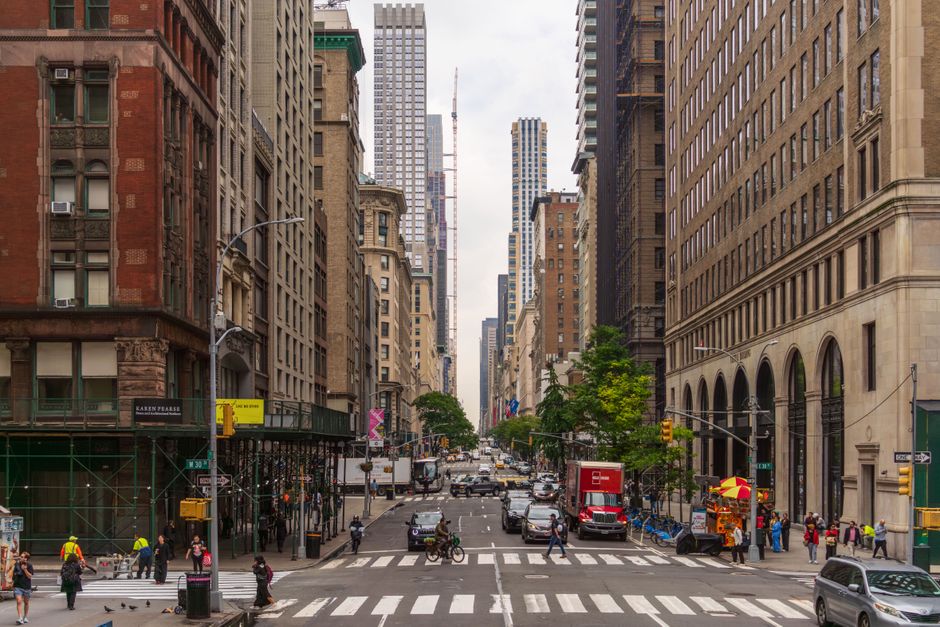
Prague's Institute of Planning and Development flagged more than 340 cases of duplicate or near-identical image installations across the city's public spaces in its most recent audit, completed in spring 2026 — a figure that has quietly become a flashpoint in debates over how the capital manages its visual environment. The duplicates range from municipal information boards carrying the same photograph in multiple adjacent frames along Wenceslas Square to identical promotional murals reproduced on blank building faces in Žižkov and Holešovice.
The timing matters. Prague is seven months out from the 2027 city council budget cycle, and the Planning and Development Institute is pressing for a dedicated line item to fund what it calls an image-redundancy review — essentially a systematic audit and replacement process for visually repetitive content on city-owned infrastructure. Urban management offices in Vienna and Warsaw have already moved in this direction, and Prague risks falling behind both cities if it does not formalise a process before the next budget is locked.
What Prague Is Actually Doing
The city's current framework sits inside the broader Metropolitní plán, the long-term spatial plan adopted in 2023. Under that document, the Prague 3 district — which covers Žižkov, where duplicate mural proliferation has been most visible along Seifertova Street — has the authority to issue removal orders for non-compliant imagery on public facades. Prague 3 used that authority twice in 2025, according to the district office's public activity log. That is a modest number given the scale of the problem the Institute identified.
The Prahou Bez Reklamy initiative, a civic campaign that has pushed since 2019 to reduce commercial visual clutter, has been monitoring duplicate placements specifically since late 2024. The group concentrates much of its documentation effort in the Old Town and along the Nusle Valley corridor, where tourist-facing image boards have multiplied with little apparent coordination between the city's property management arm, Správa majetku Praha, and individual district offices.
Vienna's approach offers a concrete point of comparison. The city's MA 19 architecture and urban design department runs a standing review committee that meets quarterly and carries an explicit mandate to flag redundant visual content on city property. Warsaw, meanwhile, adopted its Uchwała krajobrazowa — landscape resolution — in 2022, giving it enforceable removal powers that Warsaw's city hall exercised more than 200 times in 2024 alone, according to that city's publicly filed municipal reports. Prague passed its own version of a landscape ordinance in 2017, but enforcement has remained inconsistent across its 22 administrative districts.
The Practical Gap
The core structural problem is fragmentation. A duplicate image installation on a building in Prague 7, the Holešovice district, falls under entirely different administrative oversight than an identical installation 400 metres away across the district boundary in Prague 1. The Institute of Planning and Development has proposed a unified digital registry — modelled loosely on a system Amsterdam introduced for its public art inventory in 2021 — that would allow any district office to flag a duplicate in real time and trigger an automatic review. The registry has been in pilot form since January 2026, covering only the central districts Prague 1 and Prague 2.
Cost is not a trivial factor. Replacing a single large-format image panel on a city-owned information structure runs between 12,000 and 18,000 Czech crowns depending on material and installation complexity, based on tender prices published by the city's technical services department in 2025. Multiplied across hundreds of flagged sites, a comprehensive replacement programme would require dedicated funding the current budget does not include.
Residents and neighbourhood associations in Vinohrady and Žižkov who have engaged with the issue through district participatory budgeting sessions this year can submit proposals through the Praha.eu participatory platform before the September 2026 deadline. The city's planning office has confirmed the digital registry expansion to all 22 districts is scheduled for the first quarter of 2027 — provided the budget cycle allocates the necessary operational funding. That decision will be made in November.