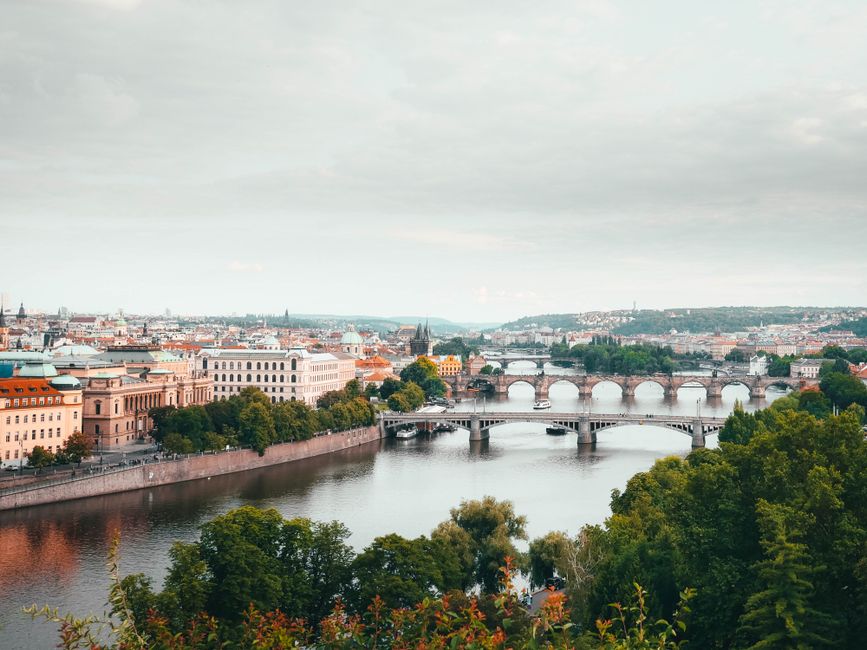
Prague's municipal digital archive holds more than 4.2 million image files, and a significant share of them appear more than once. That is the uncomfortable starting point for a city-wide audit currently being conducted by the Prague City Hall's Department of Information Technology, which has been quietly working since January to map the scale of duplicate content across interconnected databases managed by city districts, public libraries, and cultural institutions.
The problem matters now because Prague is midway through a five-year digitisation programme that is supposed to make historical records, planning documents, and photographic collections freely searchable online by 2028. Pumping more files into a system already bloated with redundant copies does not just waste server space — it undermines search accuracy, inflates indexing costs, and means that a researcher looking for a specific 1930s photograph of Náměstí Míru might wade through a dozen identical scans before finding a usable version.
What the Data Actually Shows
The IT department's preliminary findings, shared with city councillors at a June committee session, identified a duplication rate of roughly 31 percent across the joint image repositories managed by the Prague City Archives on Archivní Street in Chodovec and the Municipal Library of Prague, which runs its digital collections from the main branch on Mariánské náměstí in the Old Town. In practical terms, that means for every three images stored, almost one is a copy that adds no informational value.
Storage costs are not abstract. The city currently pays for approximately 890 terabytes of dedicated archival server capacity under a contract with a domestic provider that runs through December 2027. IT administrators have calculated that eliminating confirmed duplicates could reduce active storage requirements by between 25 and 40 percent, potentially freeing budget that is currently locked into renewing or expanding that contract. At current wholesale rates for enterprise archival storage in Central Europe, each additional terabyte carries an annual cost in the range of 1,200 to 1,800 Czech crowns, meaning a 200-terabyte reduction in active use could yield savings of roughly 240,000 to 360,000 crowns per year.
The duplication problem has specific causes. District offices across Prague's 22 administrative units began scanning documents independently, often without shared metadata standards or deduplication protocols. When the central archive later ingested files from districts including Praha 6 and Praha 10, it pulled in material that already existed — sometimes in multiple scan resolutions — without any automated check against existing records. The Digitisation of Czech Cultural Heritage programme, co-funded by the European Union and administered nationally through the Ministry of Culture, has flagged this fragmentation as a systemic issue affecting repositories across the country, not just Prague.
What Comes Next for City Systems
The IT department is piloting a hash-based deduplication tool on a subset of roughly 180,000 images from the Praha 2 district archive, which includes records from the Vinohrady and Nusle neighbourhoods. A hash comparison assigns each file a unique digital fingerprint; identical fingerprints mean identical content, regardless of filename or folder location. Early results from the pilot, which began in April, reportedly cut the tested batch by 28 percent before human reviewers were needed to adjudicate near-duplicates — images that differ only in resolution, cropping, or minor post-scan editing.
For ordinary Prague residents and researchers, the practical upshot is that the city's online portal Digitální Praha is expected to become noticeably faster and more accurate once the first deduplication wave is complete. The portal currently handles around 14,000 search queries per month for historical image content, according to usage figures published in the city's 2025 annual report on digital services. The IT department has set a target of completing the deduplication audit across all major institutional repositories by the end of the third quarter of 2026.
Institutions that contribute to the shared system — including the Prague City Museum in Florenc and the National Technical Museum on Kostelní Street in Holešovice — are being asked to adopt a unified file-naming protocol before uploading new material. City officials have said that without that upstream discipline, even a successful deduplication sweep risks being undone within eighteen months as new, unchecked files flow back in.