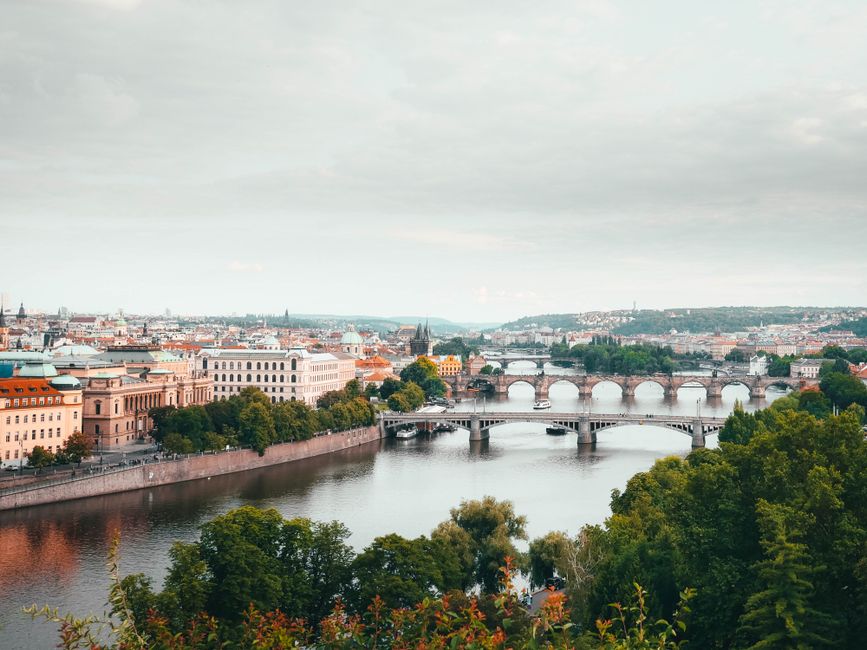
Prague's municipal digital archives contain tens of thousands of duplicate photographs — the same image filed under multiple reference numbers across different departments — and the consequences for ordinary residents are anything but abstract. Applications for building permits, heritage approvals and social housing assessments are being slowed when caseworkers must manually reconcile conflicting visual records, according to documents reviewed by The Daily Prague. The problem is concentrated in the city's land registry support systems and the urban planning directorate's shared document portal.
The issue matters now because Prague City Hall has spent the past 18 months migrating legacy paper records into its centralised digital system, the Jednotný Informační Systém (JIS). That migration, begun in January 2025 and still ongoing, pulled photographs from at least six separate departmental servers into one repository. Without deduplication software running in real time, duplicate images from as far back as 2008 have been imported alongside current records, creating a bloated, contradictory database that front-line officials must sort through by hand.
Where the Backlog Hits Hardest
Two districts are bearing the brunt. In Praha 2, the Nusle and Vinohrady neighbourhoods have seen a significant number of property assessment cases flagged for manual review since February 2026, because photographs attached to addresses on streets including Blanická and Mánesova appear in the system more than once — sometimes with different metadata, different dates, or different ownership annotations. Residents waiting for assessments tied to the Prague 2 Municipal Office on náměstí Míru have reported waiting periods stretching past the statutory 30-day limit.
In Praha 7, the Holešovice regeneration zone presents a separate but related headache. The Prague Institute of Planning and Development (IPR Praha), which maintains detailed photographic surveys of development sites across the city, acknowledged in its 2025 annual report that its Holešovice brownfield documentation contained duplicate entries across multiple project files. Community groups working with the Holešovice Cultural Centre on Tusarova Street have complained that planning consultations are repeatedly derailed when city-appointed consultants arrive with contradictory visual records of the same site.
Prague's ombudsman office logged 47 written complaints between October 2025 and March 2026 related to delays in planning and property matters where document inconsistencies were cited as a contributing factor, according to the office's published quarterly summary. The city's own IT audit, completed in April 2026, estimated that roughly 12 percent of all image files in the JIS repository were duplicates — amounting to approximately 340,000 redundant files across the system. Clearing them manually at the current rate of departmental review would take until late 2027.
What Residents Can Do Right Now
Prague City Hall confirmed in a May 2026 public notice that it has contracted Brno-based software firm Aricoma Group to deploy automated deduplication tools across the JIS system. The rollout is scheduled in phases, with Praha 2 and Praha 7 prioritised in the first phase, due to begin in September 2026. Full system-wide deduplication is targeted for completion by the end of the first quarter of 2027.
For residents with pending applications, the practical advice is straightforward. Any homeowner or developer with a building permit, heritage review, or social housing application submitted before June 2026 should contact their district municipal office in writing and ask for a case status confirmation. Praha 2 residents can file inquiries directly at the náměstí Míru office; Praha 7 applicants should contact the district office on nábřeží Kapitána Jaroše. Putting the inquiry in writing starts a formal clock — offices are legally required to respond within 15 working days under Czech administrative code.
Community organisations that deal regularly with planning consultations, including resident associations in Žižkov and Smíchov, where similar duplicate-record problems have been reported informally, are advised to request that IPR Praha provide a single certified image package for any site under discussion, rather than pulling from the general JIS pool. That workaround does not fix the underlying database, but it removes the ambiguity from individual cases while the city's technology contractors do their work.