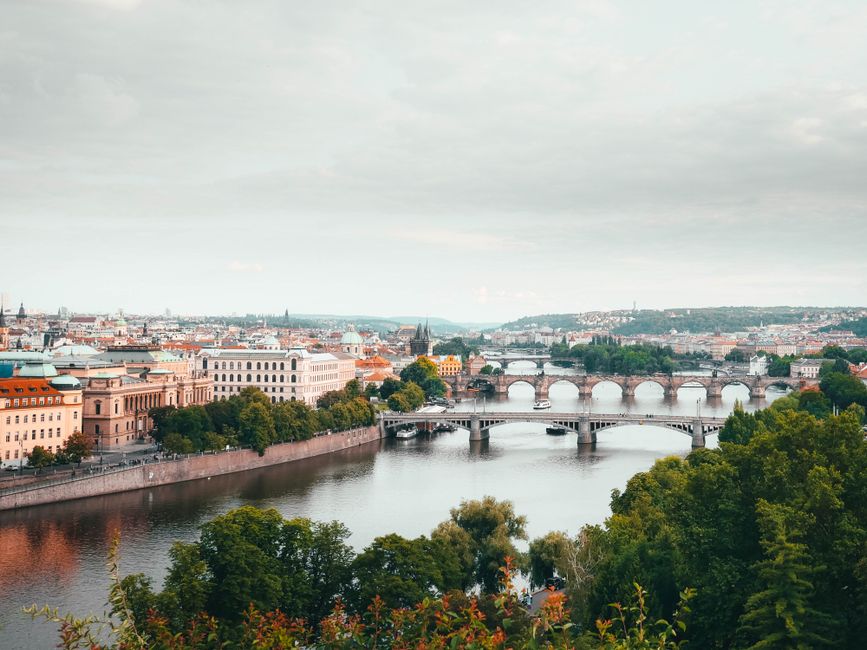
Prague's municipal digital archive contains tens of thousands of duplicate images — the same photograph stored multiple times under different file names — and the resulting clutter is directly slowing down planning and building permit decisions that ordinary residents depend on. The problem, which Prague City Hall's Department of Spatial Development has been working to address since a 2024 internal audit flagged the issue, affects databases used by staff processing applications under the amended Building Act that came into force on 1 July 2024.
The timing matters. That new Building Act was supposed to cut average permit processing times significantly. Instead, case officers reviewing digital documentation for renovation applications in densely built neighbourhoods frequently encounter duplicated site photographs, outdated facade images filed alongside current ones, and conflicting cadastral records. The result: files get flagged for manual review, adding days or weeks to what should be routine decisions.
For a family in Žižkov trying to get approval for a loft conversion, or a small business owner on Náměstí Míru seeking permission to alter a shopfront, those extra weeks translate into delayed contractors, extended scaffolding rental costs, and in some cases lost income. Scaffolding hire in central Prague typically runs between 8,000 and 15,000 Czech crowns per week depending on size and location, according to pricing published by several Prague-based suppliers.
Where the Problem Is Felt Most
Two city institutions sit at the centre of the issue. The Prague Institute of Planning and Development, known by its Czech abbreviation IPR Praha, maintains the city's public map portal and urban data layers. The Municipal House of Prague — Obecní dům — is not involved, but IPR Praha's publicly accessible Geoportal Praha is, and residents using it to research building history or ownership disputes around historic properties in Malá Strana and Hradčany have long reported encountering the same aerial photograph appearing under multiple catalogue entries. The second institution is the Prague 2 Municipal Office on náměstí Míru, which processes a high volume of residential renovation permits for the Vinohrady and Nové Město areas; staff there have previously communicated, in published annual reports, that document quality issues create measurable administrative overhead.
The duplicate image problem is not unique to Prague. Cities including Vienna and Warsaw have publicly documented similar challenges in transitioning paper-era planning archives to fully digital workflows. What distinguishes Prague's situation is the scale of the backlog: the 2024 internal audit, details of which were reported by the Czech planning trade publication Urbanismus a územní rozvoj, identified more than 40,000 flagged duplicate file entries across the main municipal property documentation system. Even if a fraction of those require human intervention, the cumulative drain on staff time is substantial.
What Residents Can Do Now
The city's response has moved slowly but is now more concrete. IPR Praha announced in spring 2026 that it would complete a first phase of automated de-duplication across the Geoportal Praha image layers by the end of September 2026, using software tools piloted on the Praha 6 district dataset covering Dejvice and Bubeneč. That pilot reportedly reduced redundant image entries in the Praha 6 layer by around 30 percent.
For residents filing applications in the meantime, Prague City Hall's official guidance recommends submitting photographs in clearly labelled sequential formats — using date-stamped filenames — to reduce the chance that case officers must cross-reference conflicting images manually. Applications submitted through the online Portál občana platform are processed through a newer document management layer that already applies basic duplicate detection, so residents who use that route rather than paper or email submission are less likely to experience delays caused by the archival problem.
Community groups in affected neighbourhoods, including the Žižkov residents' association Žižkovské fórum, have been pushing the Prague 3 municipal office to provide clearer status tracking for pending permits so that applicants know whether a hold on their file is administrative or substantive. The September 2026 deadline for the first de-duplication phase will be a significant test of whether the city's promises translate into faster decisions for the people living with the consequences.