Prague's municipal authorities are under mounting pressure to resolve a long-running problem in how the city documents and publishes itself: thousands of duplicate, near-identical, and legally ambiguous photographs circulating across official platforms, promotional materials, and urban development records. The question now is not whether the archive needs fixing, but who decides how, how fast, and at what cost.
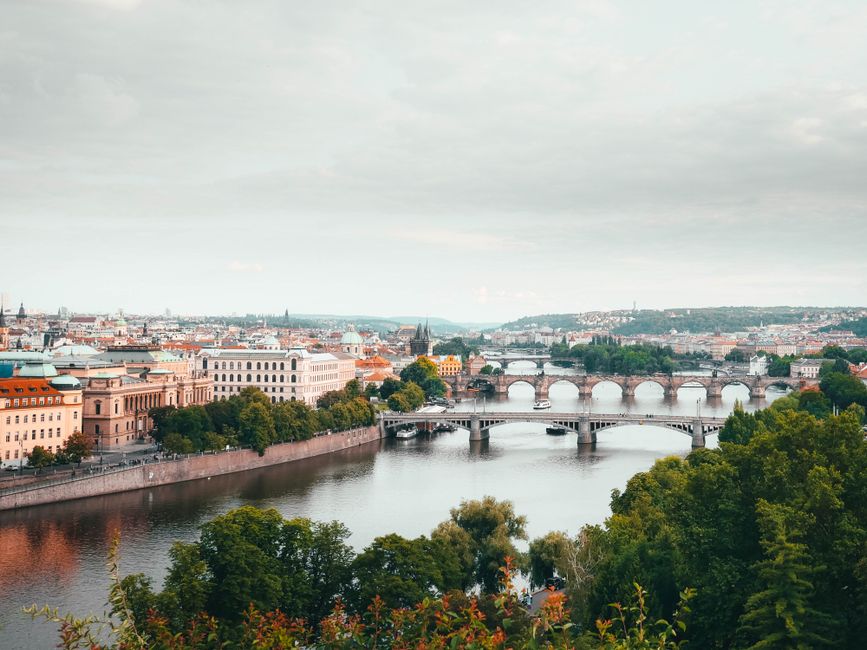
The issue has sharpened in recent months as Prague City Hall prepares to host a series of high-profile European urban planning forums through late 2026, including events connected to the EU's New European Bauhaus initiative. Presenting a coherent, rights-cleared visual identity to international partners is no longer optional. Duplicate images — some of Charles Bridge shot from near-identical angles by different contracted photographers over five budget cycles — have already caused internal confusion in tendering documents for projects along the Nusle Valley regeneration corridor.
Where the Duplication Originates
The root of the problem lies in a structural gap between at least three separate procurement streams. Prague's Institute of Planning and Development, known by its Czech acronym IPR Praha, maintains its own photographic database for urban studies. The Prague Tourist Board, operating under the brand Prague City Tourism, commissions separate image sets for international marketing. And individual district offices — including Praha 2, Praha 6, and Praha 7 — have historically purchased their own photography for neighbourhood communication, often without cross-referencing what already exists centrally.
The result is a sprawling, uncoordinated visual record. A 2024 internal audit cited by IPR Praha in its annual public report identified more than 4,200 images across city systems that were flagged as potential duplicates or near-duplicates, with an estimated 800 carrying unresolved or expired licensing terms. That figure has almost certainly grown since, given the volume of new commissions tied to the Holešovice waterfront redevelopment and the ongoing work around the Žižkov Television Tower district.
Prague City Tourism alone operates contracts with multiple agencies, and its Wenceslas Square and Old Town Square image sets alone contain dozens of shots taken within metres and minutes of each other across different contract years. The financial waste is tangible: procurement records show the city spending between 180,000 and 340,000 CZK per major photography commission, meaning even modest overlap across departments represents hundreds of thousands of crowns in redundant expenditure annually.
The Decisions Ahead
Three options are now being discussed at the level of Prague City Hall's urban development committee, which is expected to take up the question formally in September 2026. The first is a centralised digital asset management system — a single, shared repository accessible to all city bodies, with mandatory cross-referencing before any new photography commission is approved. IPR Praha has advocated for a version of this since at least 2023, pointing to similar systems adopted by the cities of Vienna and Amsterdam.
The second option is lighter-touch: a standardised metadata protocol that all departments must follow when cataloguing images, without forcing consolidation into one platform. This would be cheaper to implement but critics inside the planning directorate argue it does not solve the duplication at source — it merely makes the duplication easier to count.
The third option, backed by some members of the Praha 7 district administration, is to outsource the entire archive function to a single accredited cultural institution, possibly the Prague City Museum on Na Příkopě, which already holds historical photographic collections under formal archival standards.
A decision before the end of the third quarter of 2026 matters because the city's 2027 budget cycle opens for departmental submissions in October. Any new centralised system would need a line item — preliminary estimates circulating within IPR Praha put startup costs at roughly 2.5 million CZK for software licensing and data migration alone. Miss the October window, and the status quo runs at least another year.
What is clear is that the current arrangement serves nobody well. Districts pay for images they already own. Developers searching city records for planning photographs of specific streets near Náměstí Míru or along the Vltava embankment retrieve redundant files. And with Prague's international visibility rising, the city's fragmented visual record is increasingly a practical liability, not merely an administrative inconvenience.