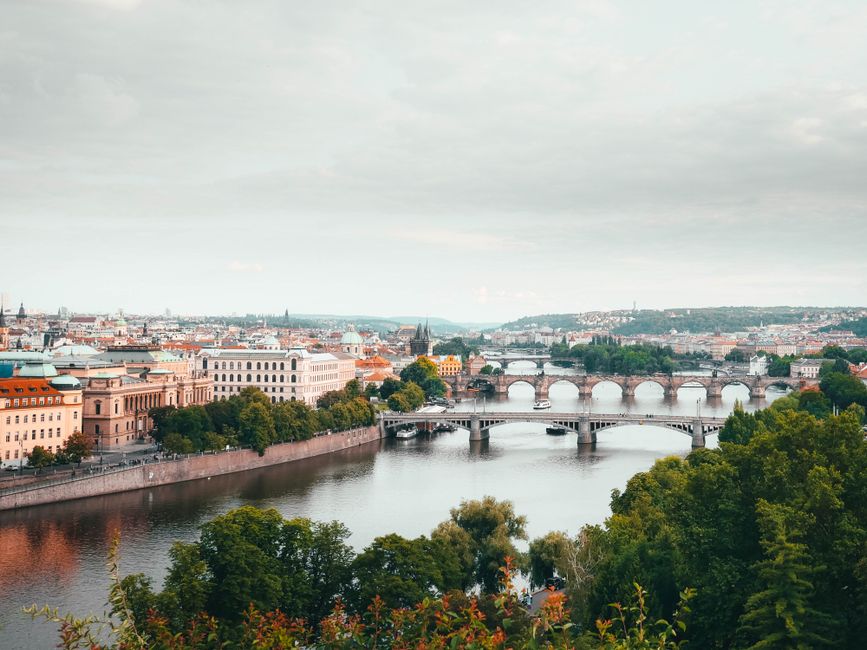
Prague's Institute of Planning and Development has spent the past eighteen months cataloguing every piece of public art within the city's administrative boundaries — a project that began after officials noticed a surge of near-identical decorative murals appearing simultaneously in Žižkov, Holešovice and Smíchov. The result is a living digital database that flags duplicate or closely replicated imagery before a new installation receives its permit. As of June 2026, the registry contains records for more than 2,400 individual works.
The timing matters. Across Europe, cheap digital reproduction tools and an expanding pool of commercial street-art contractors have made it easier than ever to paste the same image across multiple cities in a single season. Warsaw's city culture office acknowledged the problem publicly in late 2025, when residents noticed a stencilled geometric mural that had already appeared on walls in Bratislava and Budapest. Berlin's Friedrichshain-Kreuzberg district ran into a similar dispute after a commissioned facade painting turned out to be a lightly modified stock design sold through an online marketplace. Prague, by contrast, started building its verification infrastructure early.
How the Registry Works — and Where It Falls Short
The Institute of Planning and Development, based on Vyšehradská street in Nové Město, partnered with the Czech Technical University's Faculty of Information Technology to develop image-matching software that compares permit applications against the existing catalogue. Applicants submit high-resolution renders of proposed works; the software cross-references them against the database and flags similarity scores above 70 percent for manual review. According to documents published by the Institute in April 2026, the system reviewed 318 applications in its first operational year and flagged 41 for closer scrutiny.
Not all flagged cases are clear-cut rejections. In several instances the review panel — which includes representatives from the Galerie hlavního města Prahy, the city's primary public art institution — found that similarities were coincidental or arose from shared artistic traditions rather than outright copying. But twelve applications were ultimately denied or sent back for revision during 2025, a figure the Institute described in its April report as higher than anticipated.
The cost to applicants whose work is flagged is real. A standard permit review adds roughly three to six weeks to the timeline; a flagged application requiring panel scrutiny can stretch that to three months. For small mural studios operating on tight commercial contracts, that delay can kill a project before it begins.
What Other Cities Are Doing — and Not Doing
Vienna's MA 7 cultural affairs department confirmed in a March 2026 briefing document that it does not currently operate an equivalent image-matching system, relying instead on neighbourhood advisory boards to catch duplicates through local knowledge. Amsterdam's public space directorate uses a curator-led review process but has no automated component. London's individual boroughs handle approvals independently, meaning a design rejected in Hackney could theoretically win approval in Lambeth the same week.
Prague's approach is closer to that of Lyon, where the city's Direction de la Prospective et du Dialogue Public introduced a centralised art permit database in 2023. Lyon's system, however, is primarily a record-keeping tool rather than an active screening mechanism — it logs what exists but does not automatically compare new submissions against the archive.
Urban design researchers at Prague's Czech Technical University have pointed to the Holešovice district as a useful test case. The neighbourhood hosts a dense concentration of approved murals along Ortenovo náměstí and the former industrial buildings near the Holešovice market, making it one of the city's most scrutinised zones under the new regime. So far, no duplicate approvals have been recorded there since the registry went live.
For artists, developers and building owners navigating the system, the practical upshot is straightforward: submit early, use the Institute's pre-application consultation service — available by appointment at the Vyšehradská office — and expect that any design drawing heavily on online template libraries will face questions. The Institute has indicated it plans to expand the database to include three-dimensional public sculptures by the end of 2026, bringing statuary and installation art under the same screening framework currently applied to flat works. Whether the expanded system holds up under greater volume is a test that will play out publicly across the city's streets.