Jana Horáčková's company, Proximal Robotics, is finalising a €12 million Series A round this month, making it the largest early-stage tech raise in Prague's Žižkov district since records began in 2019. The deal, expected to close before the end of July 2026, puts the four-year-old firm at a post-money valuation of roughly €48 million — serious numbers for a startup whose first office was a 90-square-metre room above a kebab shop.
The timing matters. Prague's commercial sector has spent the better part of two years recalibrating after pandemic-era office vacancies spiked and retail corridors on Wenceslas Square thinned out. City Hall data from the first quarter of 2026 put the overall commercial vacancy rate at 8.3 percent — still above the pre-2020 norm of around 5.5 percent, but falling. Technology and professional services firms are doing the heavy lifting in filling that gap, accounting for 61 percent of new lease signings in Prague 1 and Prague 3 since January. Horáčková's expansion is a clean example of why investors across Central Europe are watching the Czech capital again.
From Seifertova to the European Market
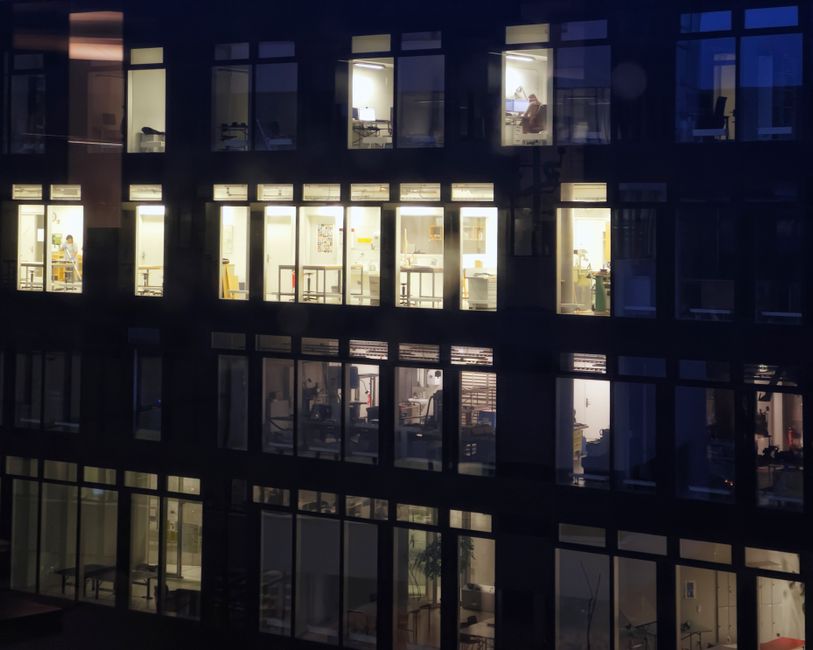
Proximal Robotics occupies 1,400 square metres of a refurbished printing works on Seifertova Street, a stretch of Žižkov that has quietly become one of the denser clusters of tech tenants in the city. Neighbours include the Czech arm of Productboard, the product-management software firm, and the Prague office of Keboola, the data-integration platform that relocated its European headquarters from Holešovice in 2024. The three companies together employ around 340 people within a few hundred metres of each other — the kind of organic density that incubator programmes spend years trying to engineer artificially.
Horáčková's product is logistics-layer software: code that sits between a manufacturer's existing enterprise system and a fleet of warehouse robots, regardless of which hardware vendor supplied the machines. Škoda Auto's logistics subsidiary piloted the system at its Mladá Boleslav facility starting in October 2025, cutting pick-and-place cycle times by 18 percent over six months, according to figures the company has shared publicly. That reference client proved decisive in attracting the lead investor on the Series A, Munich-based Speedinvest X, which is putting in €7 million, with the remaining €5 million coming from Warsaw's OTB Ventures.
Prague's broader tech sector posted combined export revenues of CZK 94 billion in 2025, up 11 percent year-on-year, according to the Czech Statistical Office. Software and IT services account for the largest slice, ahead of electronics and precision engineering. The city's appeal rests partly on cost: a mid-level software engineer in Prague commands a gross salary of around CZK 85,000 to CZK 110,000 per month, roughly half of what the equivalent role costs in Munich or Amsterdam, while the talent pool remains technically deep thanks to Czech Technical University's output of around 2,400 engineering graduates annually.
What Comes Next for Žižkov's Newest Unicorn Candidate
Horáčková plans to use the Series A to hire 45 engineers by the end of the year and open a second office, with Bratislava and Brno both under active consideration for a development hub. She has also registered a subsidiary in Germany — Proximal GmbH, incorporated in Frankfurt in May 2026 — to smooth enterprise sales into DACH markets without customers having to deal with cross-border procurement complexity.
The Czech-German Business Chamber in Prague, which has tracked cross-border tech deals since 2010, says the number of Czech software firms establishing German legal entities jumped 34 percent in the 12 months to June 2026, driven largely by companies targeting automotive and industrial clients. Proximal fits that pattern precisely.
For entrepreneurs and property developers eyeing Žižkov and neighbouring Karlín, the message from Proximal's trajectory is fairly blunt: the conversion of light-industrial and printing-era buildings into tech offices is not a trend that has peaked. Several vacant plots along Korunní and Blanická streets in Vinohrady are already in planning discussions for mixed-use schemes with tech tenancy as the anchor. The city's Deputy Mayor for Economic Development confirmed in June that Prague 3 would receive a CZK 180 million urban-renewal allocation in the 2027 municipal budget, with commercial corridor upgrades a stated priority. Horáčková, for her part, says she has no plans to leave Seifertova Street.